
Caring for Your Carbon Steel Knife: Patina, Rust & Everyday Maintenance
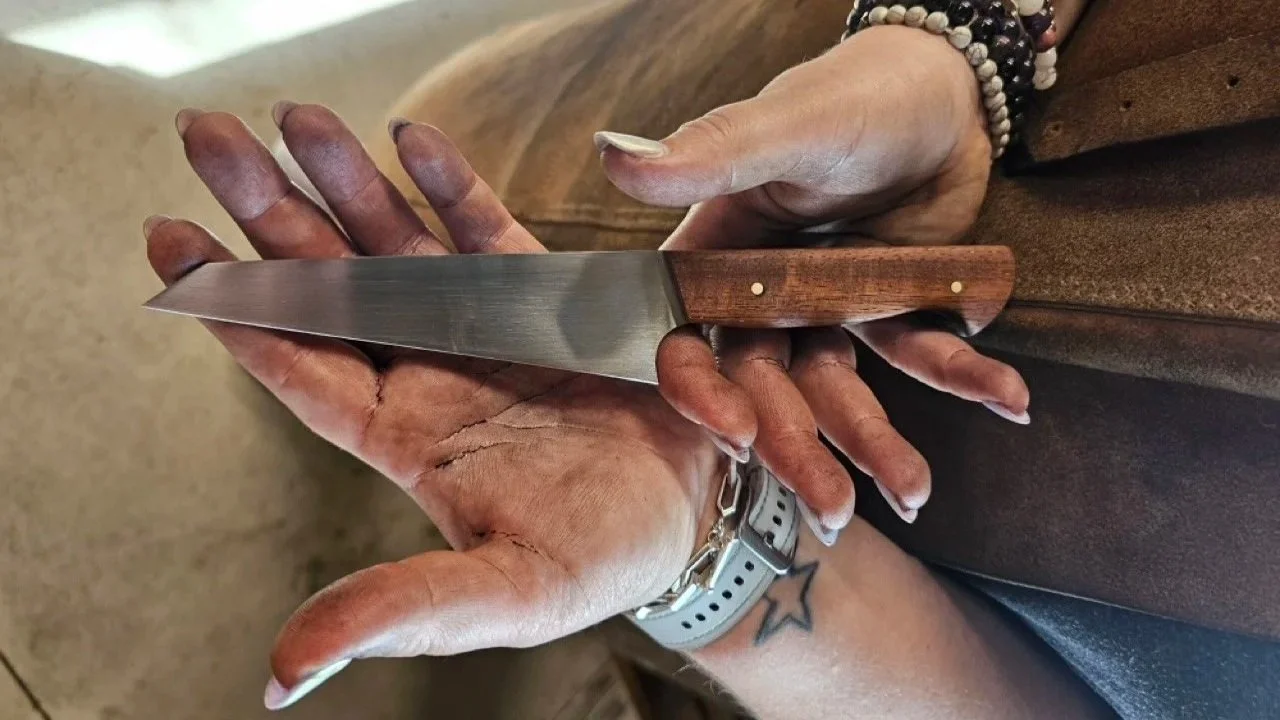
Japanese style kitchen knife made at Lost Arts, held in a women’s hands. Photo: Alex Stuart
At Lost Arts, we use 80CRV2 & 1084 carbon steel in our Auckland-based Knife Making Courses. If you’ve attended one of our courses — or you own a carbon steel knife and want to care for it properly — this guide is designed to be your long-term reference.
Carbon steel knives are loved for their exceptional sharpness, toughness, and ease of sharpening, but they do require a little more care than stainless steel. The good news? With a few simple habits, a carbon steel knife will easily last a lifetime — and get better with age.
Does carbon steel rust?
Yes, it can. High carbon steel like the 80CRV2 and 1084 we use has very little chromium, so unlike stainless it has no built-in protection. The main thing is not to leave it sitting wet. Acid is the other culprit: chop a lemon and leave the knife for an hour and you'll start to see marks where the acid has attacked the blade, and left long enough that turns into rust.
If you use the knife daily, a light wipe with a cloth after use is all it needs. If it's going into storage for a while, add a light coat of oil first. Keep that up and it will form a dark protective patina instead of rust. If surface rust does appear, it comes off easily (see "Rust: What If It Happens?" below).
What Is Carbon Steel (and Why Does It Need Care)?
Unlike stainless steel, carbon steel contains very little chromium. This means:
It sharpens more easily
Holds a keener edge
Is tougher and less brittle
…but it will react with moisture, oxygen, and acids, which can cause:
Patina (good)
Surface rust (manageable)
Deep corrosion (avoidable with care)
Rust doesn’t mean your knife is ruined — it simply means it needs attention.
Patina vs Rust: How to Tell the Difference (Quick Diagnosis)
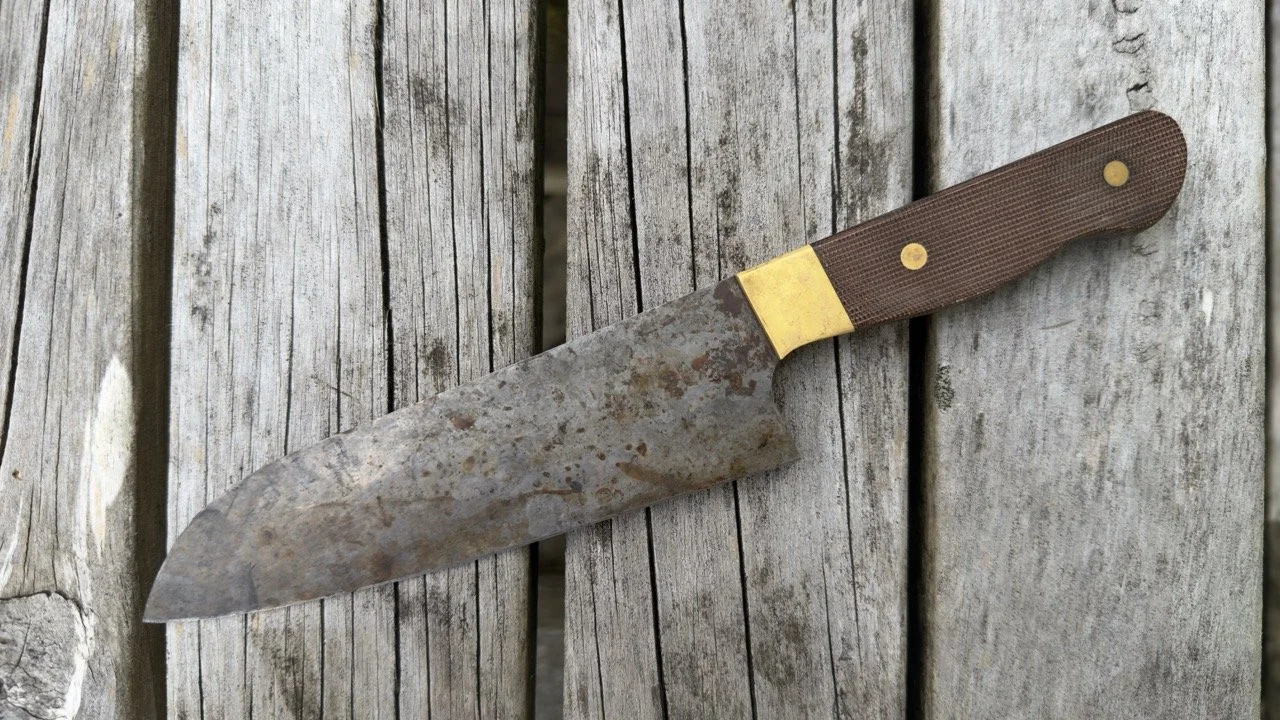
Kitchen Knife with Patina and Rust visible on the blade. Photo: Caitlin Stuart
Carbon steel changes over time — and not all discolouration is bad. Use this quick guide to figure out what you’re looking at (and what to do next).
Note: add images below each section to help readers visually identify the difference.
Patina (Normal and Protective)
What it looks like:
Grey, blue-grey, charcoal, or brown darkening
Often smooth and even-ish (though patterns are normal)
Not flaky, not fuzzy
What it means:
This is a protective layer forming through use
It helps reduce future rust
What to do:
Nothing special — just keep cleaning and drying as normal
Surface Rust (Common and Fixable)
What it looks like:
Orange spots or a light orange film
Can feel slightly rough to the touch
May appear after leaving moisture on the blade
What it means:
The blade sat wet or dirty a bit too long
Usually easy to remove without damaging the knife
What to do:
Follow the “Rust: What If It Happens?” section below
Active Corrosion / Pitting (Avoidable, But Not the End of the World)
What it looks like:
Rust that returns quickly after cleaning
Dark rough patches
Tiny “craters” (pitting) you can feel with a fingernail
What it means:
Moisture has been sitting on the steel repeatedly or long-term
The knife is still usable — it just needs better care going forward
What to do:
Clean it up, dry thoroughly, oil lightly, and improve storage habits
Keeping Your Carbon Steel Knife Sharp
A sharp knife is a safer and more enjoyable knife to use.
Honing (Regular Maintenance)
Use a ceramic or steel honing rod regularly to realign the edge
Avoid frequent use of diamond rods — they remove steel every time
Honing doesn’t sharpen; it maintains sharpness between sharpening
Sharpening (When Needed)
Use sharpening stones (diamond, water, or oil stones all work)
Start coarse if the edge is dull, then progress to finer grits
Maintain an angle of ~22.5°
(Tip: fold a piece of paper in half twice to visualise the angle)
Avoid mechanical pull-through sharpeners — they remove too much material and shorten the life of the blade.
If you have a leather strop, finish with a few light passes to remove any burr and refine the edge.
Always clean and dry the blade after sharpening to remove metal residue.
During Use:
Always cut on wood or plastic boards
Avoid glass, stone, metal, or ceramic surfaces — they destroy edges
After cutting acidic foods (lemons, tomatoes, kiwifruit), rinse and wipe the blade promptly
Don’t leave the knife wet on the bench or in the sink
After Use: Cleaning & Drying
Never put a carbon steel knife in the dishwasher.
Dishwashers:
Heat the blade and handle at different rates
Force moisture under handles
Strip oils from wooden handles
Accelerate rust and handle damage
Instead:
Wash gently with warm water and mild detergent
Rinse and dry immediately
If appropriate, a damp cloth wipe is often enough
Before storing, apply a very light coat of food-safe oil or natural wax to the blade.
Oiling Your Carbon Steel Knife
Oiling protects the blade from moisture and oxidation.
Best oils:
Food-grade mineral oil
Camellia oil
Board butter / natural wax blends
Avoid:
Olive oil or cooking oils (they go rancid)
How often?
Daily use: oil occasionally or as needed
Infrequent use or storage: oil before storing
Caring for Wooden Handles
Wooden handles need love too.
Never soak them
Oil occasionally with mineral oil, tung oil, or a handle-safe finish
If they look dry or pale, it’s time to oil
This prevents cracking, swelling, and water ingress.
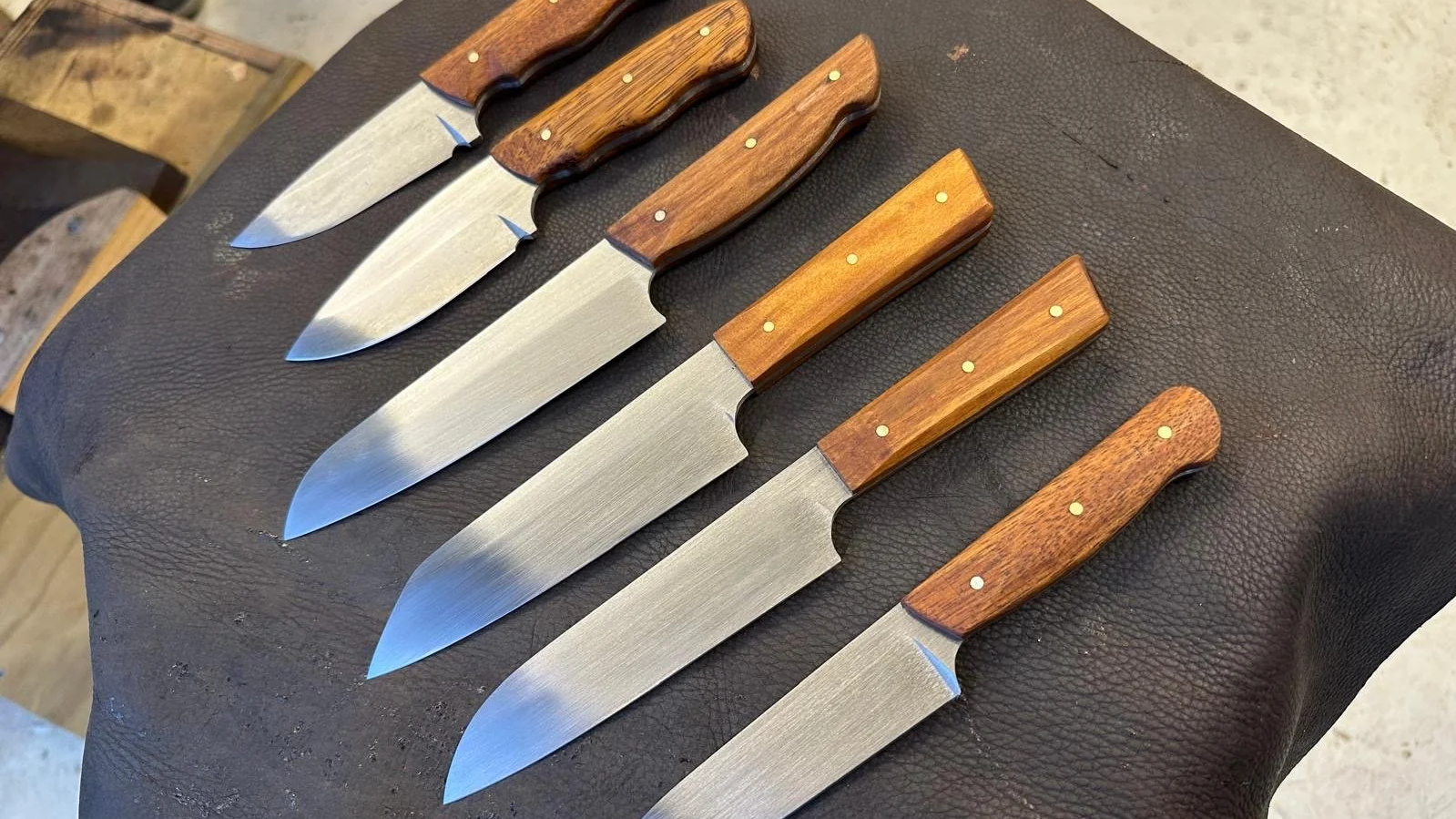
Line up on five knives handmade at Lost Arts, with wooden handles. Photo: Alex Stuart
Best Knife Storage Methods
Store in a dry, well-ventilated environment
Magnetic knife strips or open knife blocks are ideal
Avoid damp drawers or sealed containers
Do not store carbon steel knives in leather sheaths long-term.
Leather traps moisture and tannins, which promote corrosion.Avoid blade-to-blade contact — this can cause dulling and galvanic corrosion.
Rust: What If It Happens?
Light surface rust is common and easily fixed.
For Light Rust:
Make a paste of baking soda and water
Gently rub with a cloth or soft sponge
Rinse, dry, and oil
For Stubborn Spots:
Use a rust eraser or very fine steel wool (0000)
Go gently — you’re cleaning, not grinding
If rust has caused pitting, the knife is still usable — it just adds character and history.
Developing a Protective Patina
One of the joys of carbon steel is the patina — a darkened layer that forms naturally through use.
Patina:
Protects the blade from rust
Tells the story of how the knife has been used
Makes every knife unique
Different foods create different colours and patterns. Allow it to form naturally, wipe the blade clean after use, and avoid aggressive scrubbing that removes it.
Carbon Steel Knife Care: Quick Do & Don’t List
Do
Dry immediately after use
Oil lightly before storage
Use wooden or plastic boards
Embrace the patina
Don’t
Put it in the dishwasher
Leave it wet or dirty
Store long-term in leather
Panic over surface rust
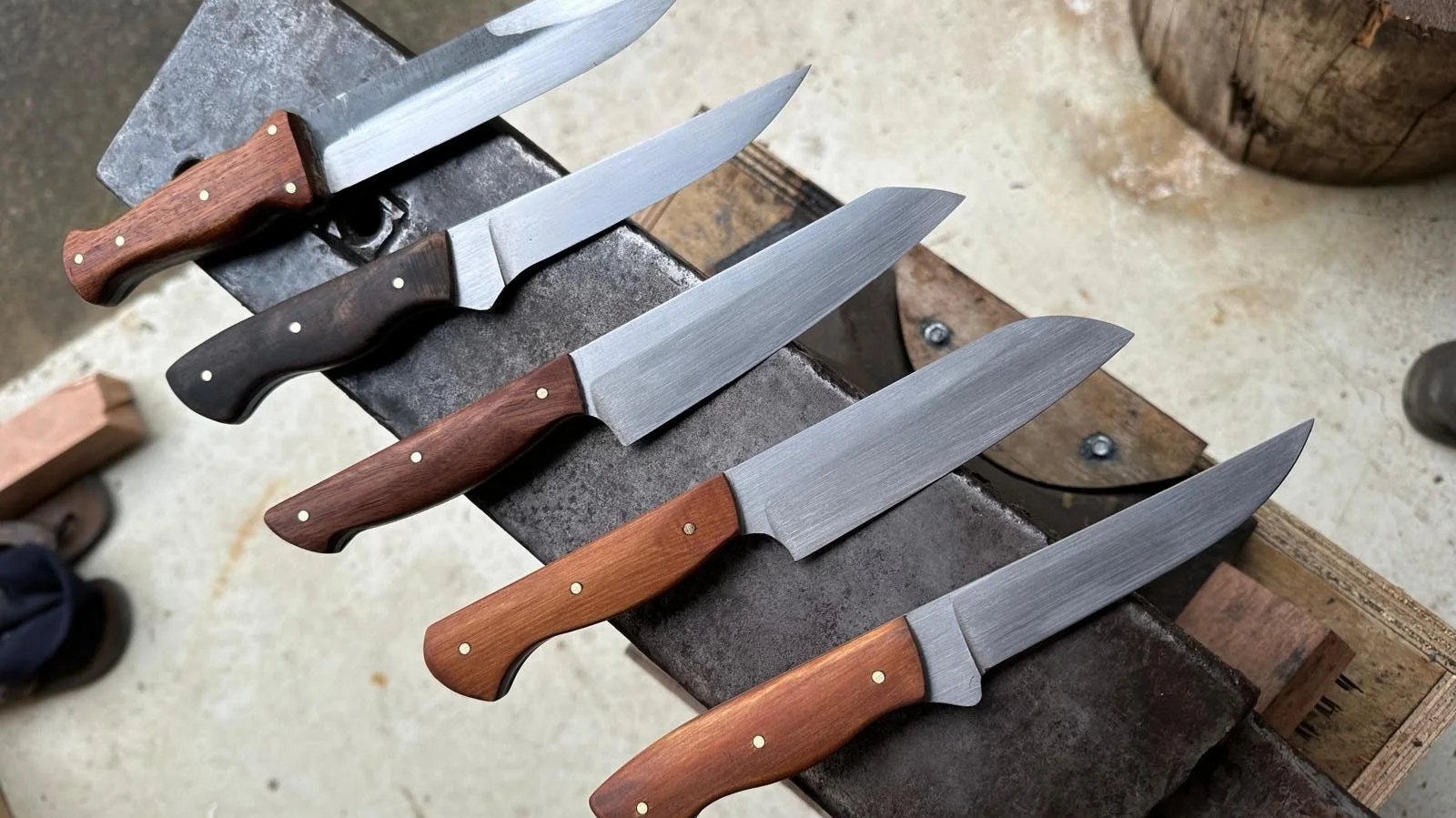
Five knives displayed on an anvil, a mixture of styles and wooden handles. Photo: Alex Stuart
FAQs: Carbon Steel Knife Care
-
They can rust if left wet or stored in a damp place, but they’re very easy to maintain. Drying after use and occasional oiling prevents most rust issues.
-
No — patina is normal and protective. It helps shield the blade from rust and is part of what makes carbon steel knives unique.
-
Rinse and wipe the blade promptly. Acids speed up reactions on carbon steel, which can lead to spotting if left sitting.
-
For short-term transport, yes. For long-term storage, avoid leather sheaths — they hold moisture and can promote corrosion.
-
Food-grade mineral oil or camellia oil are ideal. Avoid cooking oils like olive oil because they can go rancid and sticky.
-
If you use it daily, oil occasionally as needed. If you’re storing it for a while, oil before putting it away.
-
Yes — a honing rod can help maintain the edge. Ceramic rods are a great option. Avoid overusing diamond rods, as they remove metal.
-
A baking soda and water paste works well for light rust. For stubborn spots, use a rust eraser or very fine steel wool (0000), then dry and oil.
-
No. Dishwashers are harsh on both the blade and handle, and they accelerate rust and wear even if you dry the knife afterwards.
-
Item descriptionThis is usually due to hidden moisture (near the handle), humid storage, or leaving the blade in a damp dish rack. Improve airflow and add a light oil coat.
What about stainless steel?
Stainless is far more forgiving. You can chop lemons or salty fish and leave the knife on the board for the day, and it will usually be fine, so you don't need to wipe it down as quickly as you would carbon steel. It still isn't rustproof: leave it wet or sitting in salt water for weeks or months and it will rust. Day to day, rinse it, dry it, and keep it out of the dishwasher. See the Handmade Stainless Filleting Knife.
Final Thoughts
Caring for a carbon steel knife isn’t difficult — it just requires mindfulness and consistency. With proper sharpening, cleaning, storage, and a bit of oil, your carbon steel knife will serve you for decades and only improve with time.
If you’re interested in making your own carbon steel kitchen or hunting knife, check out our one-day knife making courses at Lost Arts and take home a tool you truly understand from the inside out.
Looking for one of Bruce's knives? See the handmade knives.