A Deep Dive into our Knife Making Experience

Man using a belt sander in the workshop, sanding his wooden knife handle into shape. Photo: Alex Stuart
If you’ve ever heard of our Auckland workshop and thought “that looks epic… but I’d probably lose a finger” - you’re in very good company.
Most people arrive on the day with absolutely no experience with tools or machines and they all leave at the end of the day with a beautiful handmade Knife they are proud of.
Even if assembling flat-pack furniture feels like a stretch, you can do this.
If you’re curious about what happens on the day, here’s a behind-the-scenes look at exactly how the day unfolds - and why it’s nowhere near as intimidating as you might think.
If you're exploring unique experience gifts, you might also enjoy our guide explaining why knife making has become one of the most memorable hands-on experiences you can give someone.
Welcome to the Workshop
We kick things off with a relaxed welcome and introductions to Bruce (Master Knife Maker) and the group, followed by a chat about what you’ll be making.
This is the moment most people realise two important things:
The environment is friendly - not some intense industrial workshop.
Everyone else is a beginner too.
Bruce runs through the plan for the day, covering workshop safety, explain the knife making process, and shows examples of finished knives so you can see what’s possible. You’ll also choose the style of knife you want to make - whether that’s a kitchen knife or hunting knife.
Designing Your Knife
One of the biggest surprises for people is just how hands-on the process is.
You are given a slab of carbon steel and a range of knife templates to choose from. Some people have an idea of the knife they want before they even arrive and others have no clue. Bruce is great at helping you figure out what knife style you might like if your not sure where to start, and its totally okay to choose a template purely because you think it looks cool.
You’ll also make decisions about:
Handle style
Type of wood for the handle
Small design preferences like pin placement
Blade shape - linked to the function or purpose
Don’t worry - artistic talent is not required. Even if your drawing ability peaked in Year 3, Bruce guides you through the designing so everything works and looks sexy.
Getting into the Grind
Next comes the part that can be intimidating but everyone secretly looks forward to - working with the steel.
Using our professional knife making grinders (with demonstrations and plenty of guidance from Bruce), you’ll refine your steel into the knife shape you traced. This part is were the sparks start to fly but dont worry your safe wearing protective gear.
Grinding can feel pretty intimidating at first, there is definitely a knack to it but we will coach you through the techniques. It's really satisfying too.
Before you know it the steel starts to transform in your hands as the day goes on into something unmistakably knifey.
Heat Treating in the Forge
Next you take your knife shaped piece of steel and heat it in the forge. This is the part that will make you feel like a real blacksmith - smoke, flames and lots of excitement.
Bruce will explain to you the magic (and science) that is heat treating. Basically this is where your steel is heated in the forge to extremely high temperatures, and then dunked in oil cooling it super quickly - hardening it so it can hold a sharp edge.
It’s also the part when you can get banger photos - trust us, it looks awesome.
After that, the blade goes into the kiln (fancy word for hot oven) for tempering. Together, these steps transform soft steel into a hard, functional knife blade.
Handle Building and Assembly
Once the blade is tempered and you've had some lunch, attention shifts to the handle.
You’ll choose from a range of recycled and sustainably sourced timbers. The selection changes frequently as we are always sourcing bits and pieces of timber to use on our knives, but you’ll often see options like:
Kwila (often used in decking)
Purple Heart (decking and furniture)
Rimu
Walnut
Oak
Jarrah (durable Aussie hardwood)
Once you’ve made the very important timber decision, you’ll shape it, fit it to the tang, and secure it with pins and adhesive.
From there its all about sanding and refining it to a shape that feels comfortable in your hand. There’s a surprising amount of creativity here - different shapes, materials, and finishes all change how the knife looks and feels.
This is the point in the day when all of a sudden the messy lump of glue covered wood and metal turns into an elegant piece of artwork.
Final Grind, Sharpening and Finishing
The final stage is arguably the most exciting moment and that is putting the sharp edge on your new blade. We never get tired of seeing peoples faces light up when they see it push cut through a piece of paper or shave the hair off an arm.
You started with a flat sheet of steel. You leave with a knife you designed and made yourself - one that with proper care, will last decades.
It’s a feeling of pride knowing you made your own knife and one of the reasons we love what we do here so much at Lost Arts.
Do You Need Experience? (Short Answer: No.)
This is easily the biggest hesitation people have with the experiece.
And it makes sense - knife making might sound technical and that can be a little overwhelming.
But here’s the reality:
Most participants have zero workshop experience.
Very few have ever made a knife before.
You’re supported every step of the way.
Confidence is usually the only barrier — not ability.
We also get plenty of solo attendees, so you won’t be the “odd one out” if you come alone. That being said, bringing a friend, partner or family member makes for a brilliant shared experience.
Why People Love It So Much
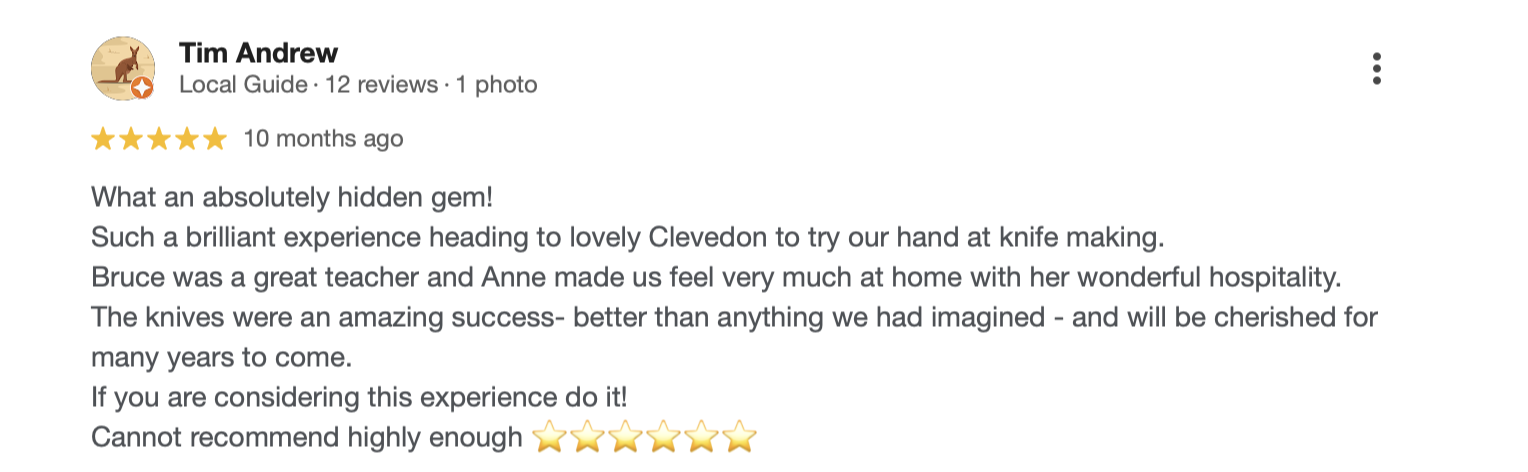
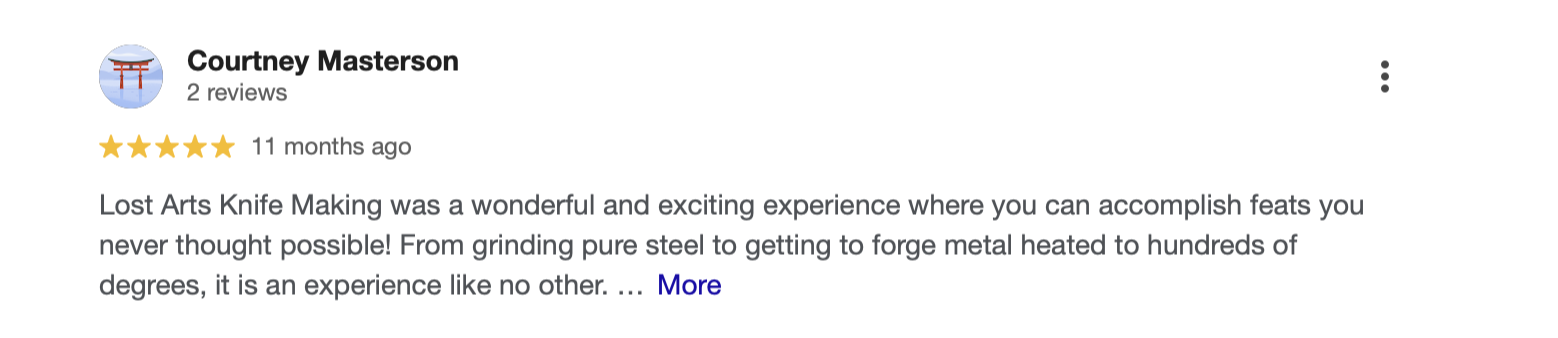
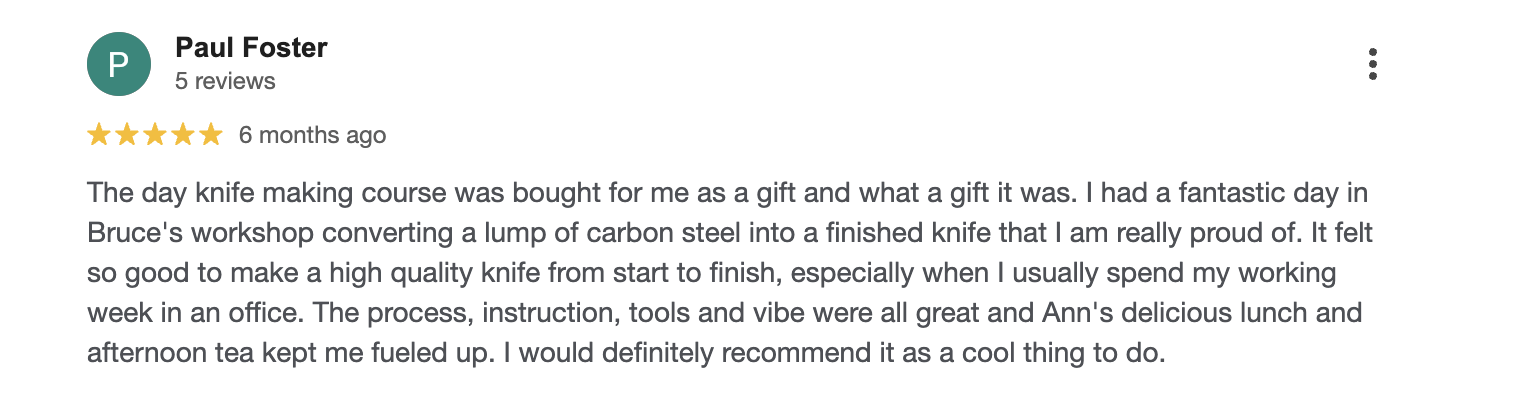
There’s a reason this consistently gets described as one of the most memorable experiences people have had.
There’s a reason participants describe the day as one of the most memorable experiences they’ve had.
It’s a day that combines
Learning a new skill
Working with your hands
Stepping outside your normal routine and comfort zone
Creating something tangible
Feeling genuine accomplishment
In a world where so much of life happens on screens, doing something physical and real feels good inside.
And then there’s the added bonus of leaving with something you can use daily and show off!
Who This Experience Is Perfect For
We get a massive mix of people on our classes which adds so much to the fun of the day.
It’s perfect for:
People booking for themselves
Partners or family members looking for meaningful gifts
Dads and their mates
Chefs and home cooks
Outdoor enthusiasts and hunters
Couples wanting a shared experience
Friends looking for something different
People visiting Auckland and looking for something to do
Corporate groups and Christmas parties
If someone enjoys learning, creating, or trying new experiences, they’ll likely enjoy this.
If you’re considering gifting the experience, you can explore our gift voucher options here!
Ready to Experience It for Yourself?
Got to this point and you are keen to give it a go? here’s where to go next: